We’ve all been there. You’re standing in the aisle of a grocery store, squinting at an impossibly long list of ingredients, or you’re out with friends at a new restaurant, asking the waiter for the third time, "Are you absolutely sure the meat is Halal?" For Muslim consumers, navigating the modern food landscape can sometimes feel like walking through a maze. With complex supply chains, hidden ingredients, and a loosely regulated Halal market, "trust me, it’s Halal" doesn’t always bring the peace of mind we crave.
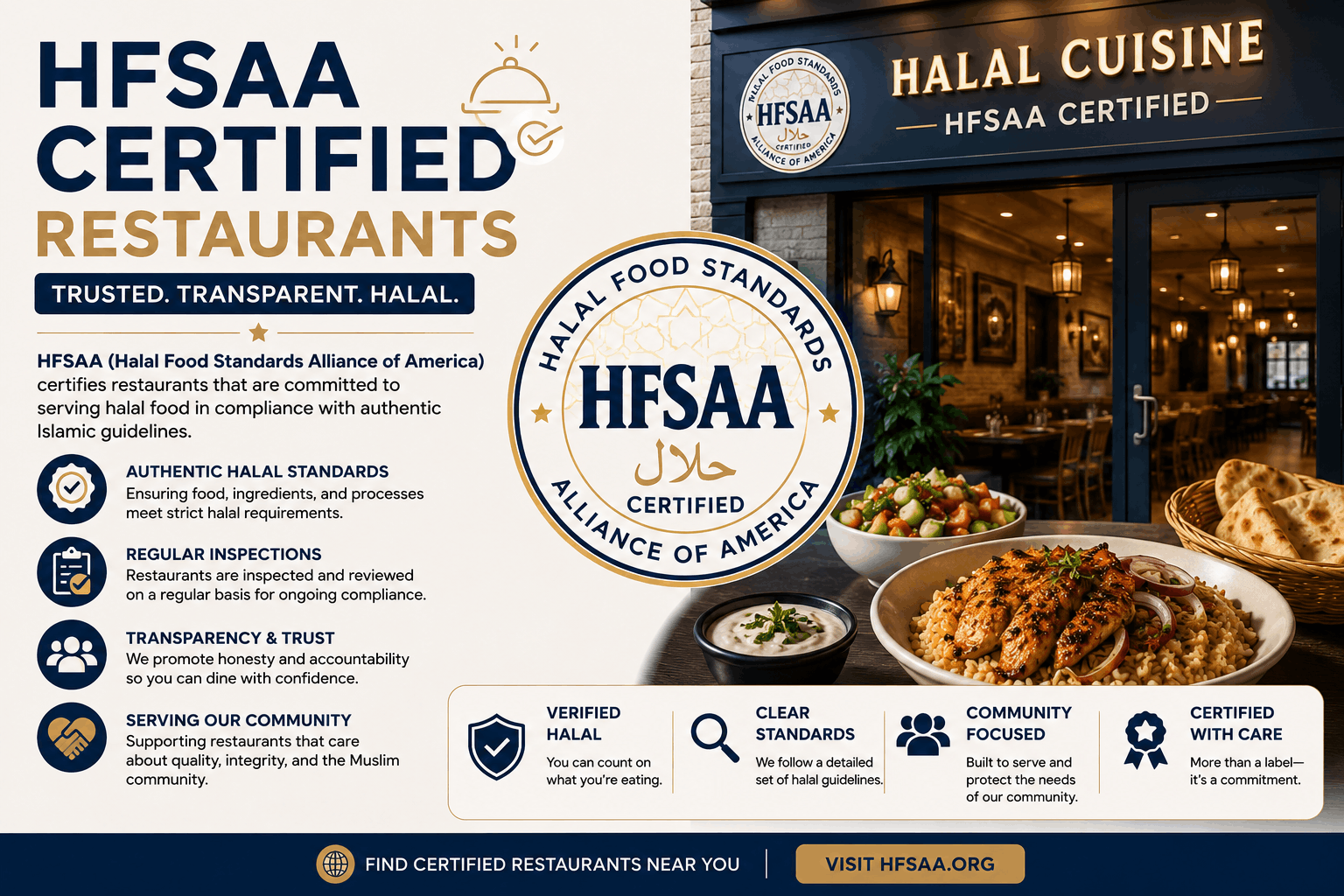
This is exactly where the Halal Food Standards Alliance of America (HFSAA) steps in—and why spotting their certification logo is becoming a major sigh of relief for families and foodies alike.
What is the HFSAA, Really?
At its core, HFSAA isn't just a corporate regulatory body; it’s an initiative built by the community, for the community. Created, supervised, and supported by Islamic scholars, HFSAA was born out of a very real frustration with the inconsistencies and issues plaguing the North American Halal industry.
Their mission is refreshingly straightforward: to ensure that Muslims have access to Halal consumables that meet a transparent, verifiable standard—one that respects and satisfies diverse scholarly opinions.
In short? They do the heavy lifting and rigorous background checks so you don’t have to.
The Power of "Values-Based Consumerism"
When you see the HFSAA certified logo, you aren't just looking at a rubber stamp. You are looking at a guarantee of fair trade, clear labeling, and uncompromising purity.
Shahed Amanullah, the founder of Zabihah.com, perfectly summarized the impact of HFSAA by noting that they ensure consumers aren't being "shortchanged in their pursuit of values-based consumerism." It’s about more than just avoiding pork or alcohol; it's about knowing the entire process—from the slaughterhouse to your plate—has been treated with dignity, transparency, and strict adherence to Islamic law.
It’s Not Just About the Meat
While restaurants and meat markets are the most visible beneficiaries of HFSAA certification, the organization’s reach goes far beyond your favorite burger joint. With over 15 years of experience, HFSAA applies its rigorous standards to a massive variety of industries, including:
- Pharmaceuticals and Supplements: Ensuring your daily vitamins are free of gelatin or hidden non-Halal derivatives.
- Cosmetics and Flavors: Giving you confidence in the products you put on your skin and the extracts used in your baking.
- Agricultural and Industrial Products: Auditing the foundational elements of the supply chain.
Why This Matters for You
Think about the mental energy you spend verifying your food. Whether you are a college student grabbing a quick bite, a parent packing school lunches, or someone simply trying to live a mindful, spiritually conscious life, that mental load is exhausting.
As Dr. Rania Awaad beautifully points out, checking the sources of what we consume is essential because "ultimately it affects your soul." HFSAA takes the guesswork out of the equation. By offering a unified, strict standard, they empower consumers to make choices based on mutual consent and absolute clarity.
Look for the Logo
The next time you’re out shopping or trying a new dining spot, keep an eye out for the HFSAA logo (the clean, green emblem with 'Halal' written gracefully in Arabic). When you choose to support HFSAA-certified businesses, you are doing more than buying a meal. You’re voting with your wallet. You’re supporting transparency, rewarding ethical business practices, and helping to build a stronger, more reliable Halal economy for the future.
You can easily find all HFSAA certified restaurants on the Halal Bites app! Try it out today!