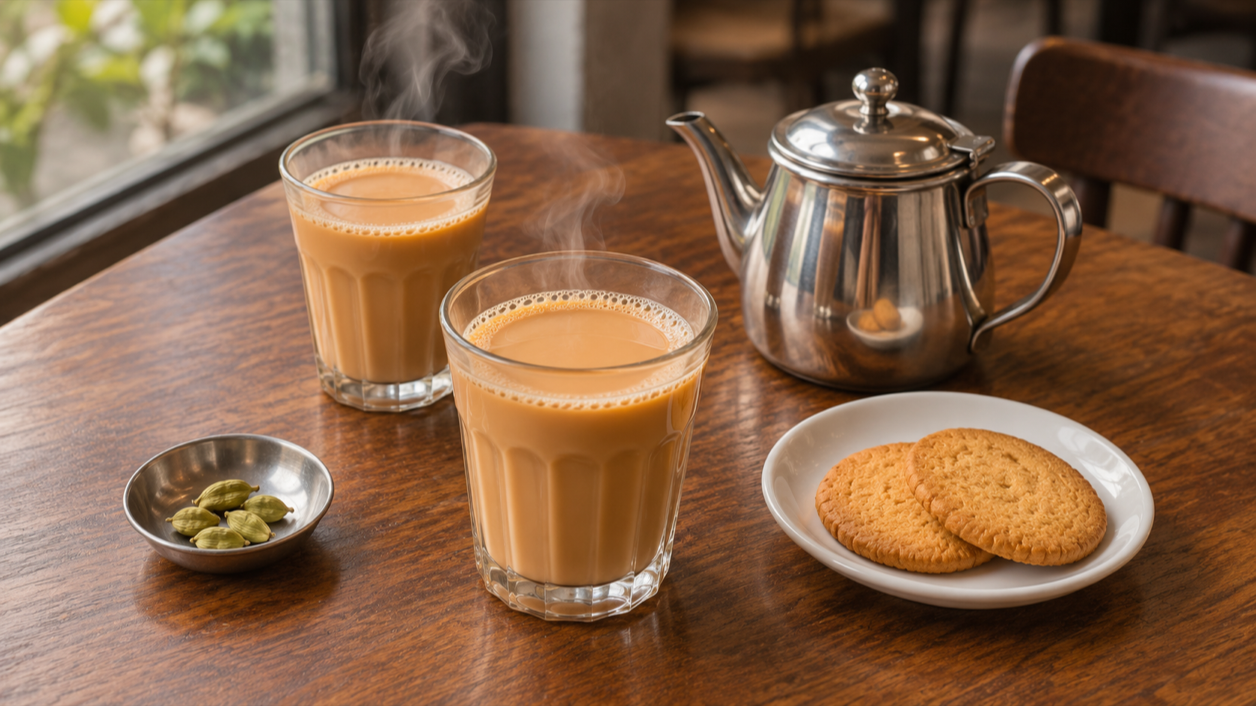
Karak chai makes “just popping in” an ambitious promise. There’s the sweet smell of warm milk, the lift of cardamom, and that first sip of tea strong enough to hold its own through both. Suddenly, a quick drink has acquired a plate of snacks and another half-hour. Everyone was absolutely about to leave. Someone has ordered more tea.
Small, creamy and wonderfully fragrant, karak is a milk tea with South Asian roots and a devoted following across the Gulf. Its appeal is easy to understand on a chilly afternoon. Black tea gives it depth, milk rounds out the edges, and the spices linger after the cup goes down. The interesting part is how those familiar ingredients became a daily pleasure in so many different places.
Strong tea earns its name
The name comes from the South Asian word for strong, and a satisfying karak lets the tea make itself known. Sweetness and milk have plenty to say, but there should still be that unmistakable black-tea flavor underneath.
Tea, milk, sugar and spices meet in the cooking pot, where they’re heated together before the finished drink is strained. Recipes vary between households and cafés. One cup might lean toward cardamom, with its fresh, almost citrusy perfume. Another brings the warmth of ginger, cinnamon or saffron. A pale caramel color can make the drink look gentle, though the tea underneath may be decidedly assertive.
That balance creates its own small drama. Too much sweetness can crowd out the other flavors. A strong brew with enough milk still has a pleasant grip, followed by creaminess. When the proportions suit your taste, the next sip is a very easy decision.
A drink that traveled with people
Karak’s Gulf story is closely tied to the Indian and Pakistani communities who brought their tea traditions with them. Qatar Tourism describes how the drink became part of Qatari hospitality and daily gatherings. In the UAE, too, South Asian tea-making became woven into everyday life, from neighborhood cafeterias to family visits.
South Asian vendors and cooks are central to that story. In research with tea sellers in the UAE, scholar Abdulla Moaswes recorded how migration, the availability of milk and customers’ preferences helped shape the drink. One interviewee recalled using canned or powdered milk when fresh milk was difficult to obtain for the business. Another described customers who specifically preferred the canned-milk taste.
Those details make a cup more interesting. A practical ingredient choice can become the flavor someone expects, then the flavor they miss when they’re away. Tea traditions travel through people who make a living preparing them, as well as through the friends and families who keep asking for another round.
The milk has a lot to do with it
Evaporated milk is a familiar ingredient in Qatari karak, contributing a rich texture without the added sugar found in sweetened condensed milk. Both are concentrated dairy products, but sweetened condensed milk brings substantial sweetness of its own. Which milk goes into the pot helps explain why two cups bearing the same name can feel quite different.
There’s room for fresh milk, too, and for different combinations of spices. Karak has enough variation to reward a little curiosity. A cardamom-forward cup may feel bright and fragrant. Saffron brings a more delicate perfume, with an earthy quality underneath. Ginger leaves a warmer finish. The milk gives those flavors a soft, full setting while the tea keeps the drink lively.
A crisp biscuit makes an agreeable companion, especially if it survives a brief dip. A buttery bun offers a softer bite alongside the tea. Then there are savory snacks, where a little salt and spice give you another reason to return to the cup. The difficulty is remembering which item was supposed to be the main event.
Two stops for a cup and something good beside it
At FiLLi Cafe in Chantilly, Virginia, the menu includes both FiLLi Karak Chai and FiLLi Karak Zafran Chai. The Metrotech Drive branch offers a chance to taste how a saffron variation changes the character of a strong milk tea. FiLLi identifies its Zafran Chai as saffron-infused and says all its locations serve halal food and beverages. With the two versions on the same menu, the tea itself is reason enough to settle in.
In Houston, Texas, Chai Khana Cafe & Grill on Harwin Drive lists Karak Doodh Patti among its drinks. The name places it in the wider South Asian milk-tea conversation, alongside the café’s ginger chai and jaggery chai. Its menu also offers samosas and pakora, making a tea-and-snack visit particularly tempting. The restaurant describes its kitchen as halal. Here, the menu gives that familiar invitation a little more scope, with a warm drink and a savory bite competing quite happily for your attention.
A small cup worth making time for
Karak works equally well as a drink to concentrate on and a drink to talk over. You can notice the cardamom first, then the tea, then the sweetness that stays on your tongue. Or you can become so absorbed in the conversation that the cup is nearly empty before you remember to admire it.
As the weather cools, there’s particular pleasure in wrapping your hands around something warm and fragrant. The biscuit plate may already be looking a little bare. There’s still plenty to talk about, though, and another cup sounds like an excellent place to start.